 Our current opening hours
 Deutsch
 English
 Français


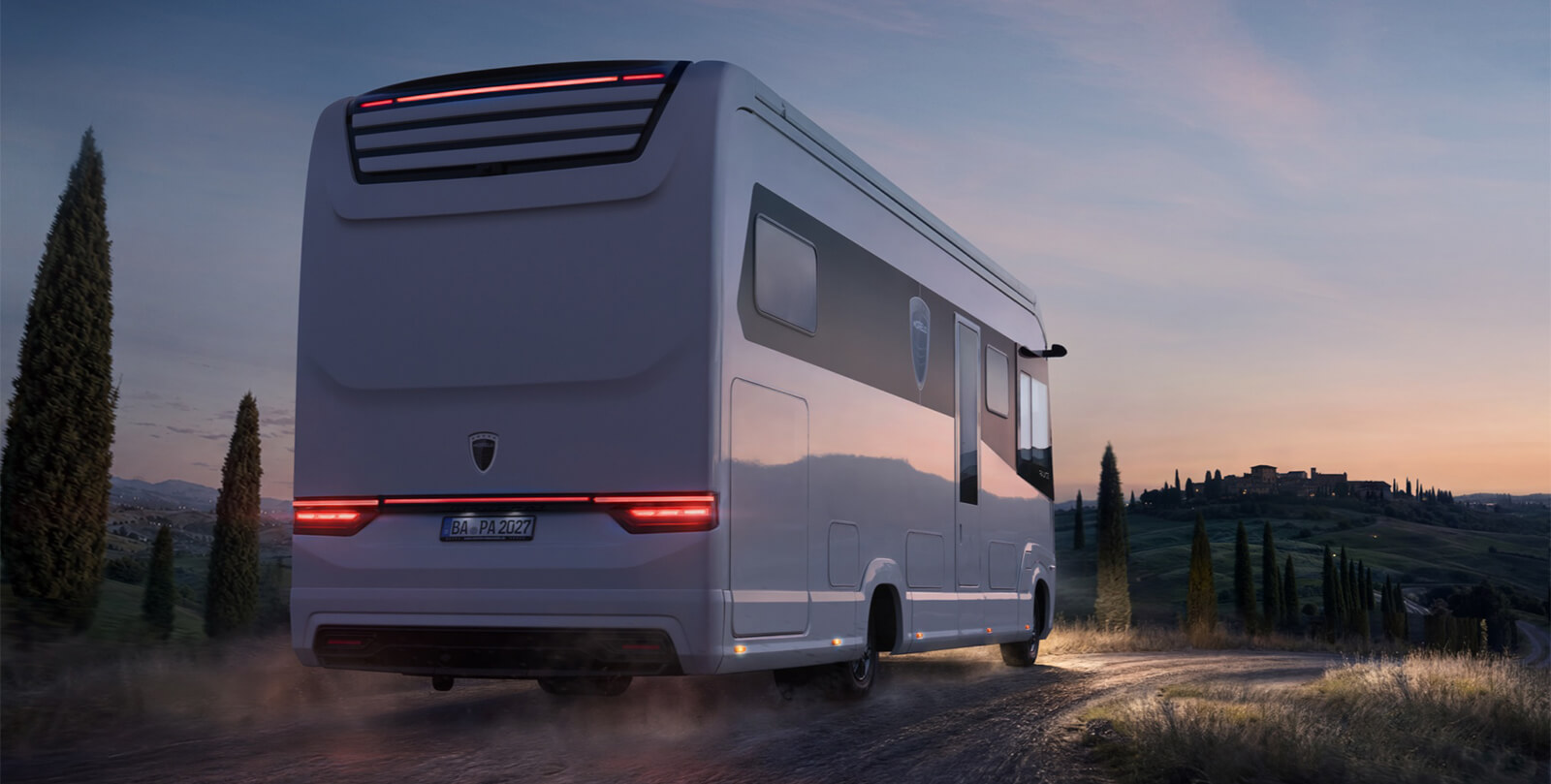


THE MORELO Chassis Modification
TECHNOLOGY YOU CAN RELY ON


What can you rely on when you’re travelling in a MORELO First Class motorhome? On outstanding quality, proven comfort, and well-thought-out details—from the sense of space to everyday ergonomics. But true confidence starts at the foundation: the chassis.
For many years, the underpinnings of every MORELO motorhome have been created in close cooperation with Fahrzeugbau MEIER—our partner on equal footing. Their lived guiding principle “The best build on us” stands for the care and precision that goes into every chassis.
Here you’ll learn how dismantling, wheelbase modification, electrics & sensors, homologation, and quality assurance work together—and why your vehicle is based on a chassis prepared with exceptional technical precision. The result: calm, stable driving characteristics, long-term durability, and complete documentation right through to the “Certificate of Conformity” (CoC).
Join us step by step through the process. Because anyone travelling first class should know what they can rely on.
In Altdorf near Nuremberg (approx. 75 km from MORELO), Fahrzeugbau MEIER bundles its full chassis expertise – based on the IVECO Daily, IVECO Eurocargo, IVECO S-Way as well as the Mercedes-Benz Actros and Atego. At the heart of the process is the drivable chassis (“rolling chassis”), which is prepared for conversion before MORELO begins building the living area.
What MEIER does:
In short: In Altdorf, the exceptionally precisely prepared chassis is created – the foundation on which MORELO builds driving stability, durability, and service-friendliness.
New and modern – opened in summer 2025: The new production hall with a central warehouse and the adjacent office building create the conditions for moving from location-based “cell production” to a takt-based production system – a consistent lean shopfloor concept from end to end. The site is designed to the KfW 40 standard; a woodchip heating system, photovoltaic installation, paint booth, and compressors with heat recovery underline the commitment to sustainability – with the goal of producing CO₂-neutral by 2045. Modern workplaces and multimedia training rooms ensure know-how transfer and continuous development.

Before a vehicle is disassembled, it undergoes a documented intake inspection: visual checks, photo documentation, and an electronic system scan via the manufacturer interfaces. This creates a clear baseline of the chassis condition at delivery – helpful for troubleshooting, warranty handling, and clean documentation. Depending on the logistics step, intake protocols are recorded both at MORELO and in Altdorf.

In order to turn a truck into a motorhome, the vehicle is first brought back to “level 0”: all relevant components are removed without damage, protected for transport, clearly labelled and—where critical items such as control units, wiring looms or operating panels are involved—recorded separately. Loose parts are placed in defined boxes with a checklist, a photo and, where applicable, serial-number tracking; everything is stored in the ERP system and linked to the digital vehicle file. The parts are then delivered just in time to the respective stations—so reinstallation is possible without searching or improvisation.

Digital work instructions with photo and text guides are available at the workstation; relevant steps are recorded in the ERP system and assigned to the vehicle file. Critical points are checked twice (production/quality assurance) and—where required—confirmed via signature lists.

A neatly organized high-bay warehouse reliably supplies production – with more than 1,000,000 parts in stock. All components are clearly labeled and managed via the ERP system, ensuring full transparency of inventories, batches/serial numbers, and minimum quantities, making every inventory count effortless.
Interfering add-on components are removed from the chassis, factory connections (e.g. rivet points) are carefully released in a defined manner, and the frame is supported on adjustable feet to ensure geometric stability during cutting. The weld seam area is ground clean and prepared for a double V-groove weld. All work is carried out exclusively by qualified specialists: all welders employed hold a valid welder qualification (e.g. TÜV/Dekra) and renew it at regular intervals. The frame is then shortened or lengthened as required – in the case of extension, using a precisely fitted insert profile. Using templates, clamping fixtures, and straightedges, the frame is accurately leveled, tack-welded, and then fully welded in a constrained position (including overhead and vertical welds). The welds are finely ground, with constant attention to remaining wall thickness and clean transitions. In the modified area, reinforcements are added in accordance with the manufacturer’s specifications (e.g. angle profiles). Hole patterns, spacings, and minimum distances to weld seams comply exactly with the specifications of IVECO or Mercedes-Benz; all bolted joints are tightened to defined torque values and documented. The torque wrenches and power tools used for this purpose are regularly inspected and calibrated in accordance with their inspection intervals to ensure reliable and accurate values.

Finally, the team lead and quality assurance perform a four-eyes inspection:
Special installations (e.g. Telma retarders) are integrated into the manufacturers’ crossmember and spacing logic. The modified area then receives targeted corrosion protection (including cavity and creeping waxes) to ensure long-term durability and value retention.
Before any options come into play, the body is given its load-bearing foundation: depending on the vehicle series, subframes and lateral outriggers supplement the standard chassis. They support the floor structure across the full vehicle width, integrate the double floor and modular furniture, and distribute loads from driving operation, stabilizer operation, and payload. Positioning, bolting (hole patterns/spacings), and corrosion protection are carried out in accordance with the manufacturer’s specifications; all work steps are documented.
Rear Lowering
For garages and carrier solutions, the rear end is lowered (depending on vehicle and model). This reduces loading height and creates defined mounting points for bicycle, motorcycle, or car carriers—without losing sight of driving dynamics.
Many options from the > MORELO price list that relate to the chassis are already implemented at Fahrzeugbau MEIER in Altdorf—before the chassis is transferred to Schlüsselfeld. This ensures that air suspension systems, tanks, track-width solutions, wheels, and electrical interfaces are cleanly integrated from the outset.
Why does this make sense? Accessibility & efficiency: Many interfaces are later located “beneath the body” — what is properly integrated now does not need to be laboriously exposed later. Everything from a single source: mechanics, electrics/sensor systems, documentation, and inspection reports are all aligned—one responsible party, one process. Seamless handover to MORELO: the chassis arrives in Schlüsselfeld ready for body installation, allowing work to begin immediately—more plug-and-play, less searching and frustration.

The aluminum wheels from Fahrzeugbau MEIER are the perfect complement to your MORELO: increased load capacity (up to 1,500 kg per wheel), a clean, high-quality appearance, and easy day-to-day maintenance. The winter-resistant coating stands up to rain, snow, and road salt, and the surface can be cleaned quickly. In this segment, Fahrzeugbau MEIER is the largest provider in the entire industry.


Leveling at the touch of a button. The optional hydraulic leveling jacks extend four cylinders at the press of a button, automatically level your motorhome, and secure it firmly—even on uneven ground. This reduces tire stress during longer parking periods and provides noticeably greater stability and quiet inside the body, especially at night.
The electrical interfaces are established early in the process so that the subsequent body installation is supplied in a clearly defined manner—without unnecessarily modifying the vehicle’s electrical system. Wherever possible, plug-in (plug-and-play) solutions are used instead of cutting or extending wiring. This keeps the original wiring harnesses intact and ensures reproducible installation on the production line.

Specifications from IVECO and Mercedes-Benz take priority: dedicated diodes and resistors prevent false signals in the onboard electronics, and grounding points are implemented in accordance with manufacturer specifications. Technical limits (e.g. permissible cable lengths) are strictly observed.

For the supply of the living area, the interfaces are bundled in a central control and fuse box – the Multiliner Box. It was developed specifically for MORELO together with Fahrzeugbau MEIER and centrally combines fuses, relays, and key signals such as indicators, braking signals, or engine speed. In addition, a pre-assembled wiring harness is used that integrates proven functions into one structured unit – service-friendly and expandable.
At the same time, the Multiliner Box manages important comfort and safety functions. For example, it monitors whether the entrance step is still extended when the engine is started – in that case a warning signal sounds, or the step retracts automatically once the door is closed. Pretty smart, isn’t it?
This work is carried out by trained electrical and electronics specialists who think in terms of circuits—not wire colors. With a focus on signal paths, grounding concepts, and EMC (electromagnetic compatibility), what ultimately matters is not the “click” of a connector but the logic behind it. The result is clearly defined interfaces, reliable protection, and a body electrical system that integrates seamlessly with the chassis.

Standardized processes, clear responsibilities, and precisely defined inspection depths ensure consistently high quality and measurably reduce error rates. Quality assurance creates transparency in shopfloor management: checklists with dual approval (production and QA), signature logs, and the four-eyes principle secure every safety-relevant step; acceptance photos document defined views. Lean standards and KPIs (e.g. first-pass yield, rework rate) make deviations visible early and manageable. All records are consolidated in the digital vehicle file—traceable and auditable from the very first step through to the chassis prepared for road readiness.

After wiring, the “marriage” of dashboard and chassis takes place: all cables, connectors, and feed-throughs are prepared, labeled, and within easy reach; contact surfaces and threads are cleaned. The preassembled dashboard is then precisely aligned by crane and carefully lowered onto the bulkhead so that nothing binds or becomes trapped. Mechanically, the carrier is bolted using the specified torque values; electrically, coded plug-and-play connectors reconnect the onboard electrical system, control units, and sensors to the chassis. Seals and cable feed-throughs are closed cleanly. The team then performs a full functional check of the integrated system: ignition, signal paths, steering-column and control elements, lighting, and brake/turn signals; a diagnostic run with fault memory scan confirms system status.
After structural work is completed, the frame receives targeted corrosion protection. The modified areas are sealed; transitions, fastening points, and cut edges are treated to prevent moisture and road salt from gaining a foothold. Depending on the chassis, creeping waxes are used for overlapping zones and cavity waxes for internal profiles (e.g. box-section frames). Gas tanks are fully sealed all around—a prerequisite for road use. The goal is a durable foundation for the body: reduced corrosion risk, higher value retention, and a stable appearance even after many winters. In addition, MORELO optionally applies a dedicated underbody sealing that provides extra protection against stone impact and spray water—creating a comprehensive protection package from the inside out.
Homologation literally means “conformity”: the manufacturer confirms that the delivered build condition exactly matches the documentation approved by the KBA.
At MORELO, this is based on the existing Stage 1 type approvals of the base vehicle manufacturers (IVECO, Mercedes-Benz) and—depending on the project—on approvals from the chassis manufacturer (Stage 1 or Stage 2). From this, a vehicle-specific specification sheet is created that precisely documents the final build condition of the motorhome (including the modified chassis): engine/transmission variants, possible wheelbases, wheel–tire combinations, permitted track widths, approved towing systems, electrical components and interfaces, among others. Changes to the base vehicles are continuously reviewed and incorporated, keeping the documentation up to date.
For all homologation-relevant add-on components, test and laboratory reports from recognized technical services (e.g. TÜV, DEKRA) are available and assigned to the specification sheet. After review, the KBA grants the type approval (with approval mark, broken down by type/variant/version). On this basis, a CoC (Certificate of Conformity) is issued for each vehicle—an essential prerequisite for smooth registration and complete, traceable vehicle documentation.
The factory-installed wheel spacers are made from high-strength aluminum alloy (e.g. EN AW-7075 / AlZn5.5MgCu), selected for its strength, toughness, and fatigue resistance in commercial-vehicle operation. Spacers, wheel studs, and wheel nuts are designed as a matched system, engineered for the wheel loads encountered in service and the specified tightening torques.
Suitability is demonstrated through a test program conducted by recognized technical services (e.g. TÜV/DEKRA):
All results are documented with report numbers and assigned to the vehicle’s specification sheet.
For installation control, safety-relevant bolted joints are marked; seating and orientation remain visible until final acceptance, so any loosened fastener would be immediately apparent. The torque wrenches and power tools used are regularly inspected, calibrated, and certified; the corresponding records are on file.
The permissible track widths of a vehicle are defined in the type approval (e.g. IVECO Daily – MEIER Stage 2). Track widening using wheel spacers has been used thousands of times and proven over the long term; manufacturing and installation follow high quality standards with documented testing and process control. All relevant test reports, variants, and torque specifications are clearly assigned and form part of the continuous documentation chain (specification sheet/vehicle file).
Your added value: a technically validated, type-approval-compliant track-width solution with transparent documentation—for a coherent appearance and balanced driving behavior.
At the end of the production line, quality assurance brings all threads together. For each chassis, a final, structured acceptance is carried out across all relevant areas—including wheelbase and reinforcements, platform and interfaces, electrics and sensors, as well as axle and wheel components. Each item is assessed as OK / not OK / not ordered; any deviations are documented with root cause and corrective action.
Double safety: safety-critical steps receive dual checks (production and QA) and—where applicable—signature lists. If a confirmation is missing, the step is restarted and rechecked. Markings at defined points facilitate traceability on the vehicle.

All reports, checklists, and records are consolidated in the digital vehicle file (ERP/DMS):

Finally, quality assurance checks the completeness of the documentation—from the specification sheet references through to all approval-relevant documents. The goal is a clearly traceable chassis that is technically and formally prepared for the next process step. After acceptance in Altdorf, the fully modified chassis is transferred to MORELO in Schlüsselfeld.
After the chassis conversion at Fahrzeugbau MEIER, delivery to Schlüsselfeld takes place and the chassis is formally handed over to MORELO production. Tire sizes, track width/wheel spacers, and tank configuration are checked against the customer-specific order. The chassis then enters the production line: installation of the double floor, modular assembly of the furniture, and completion of the living area.
Interested in experiencing the process live? Then join a free MORELO factory tour in Schlüsselfeld and see firsthand on the production line how a bare chassis is transformed into a First Class motorhome.
After production, the technical inspection and adjustment work begins—carried out exclusively by trained specialists. In the service pit, tire pressure, leak tightness, fastenings, and wheel clearance in the wheel housings are checked; safety-relevant bolted joints remain marked so that seating and orientation stay visible until final inspection. In parallel, the manufacturer’s diagnostics establish an electronic baseline (fault memory, live data, initializations). Building on this, a vehicle-specific wheel alignment (toe/camber/caster) is performed based on the actual body weight, driver assistance systems are calibrated (e.g. front camera/distance radar), and air suspension and leveling jacks receive their basic settings—including a defined tilt function for convenient tank draining. A road test of around 30 km then verifies straight-line tracking, steering precision, braking performance (ABS/ESP), noise and vibration behavior, and the interaction of all systems.
Before release, operating fluids are filled and/or checked, and the lighting is adjusted to the actual body configuration. Each vehicle is weighed; measurement, calibration, and functional test reports as well as acceptance photos are added to the digital vehicle file. Release for delivery is granted only when all inspection points have been fully met; any deviations are corrected immediately and reverified. This ensures that every :contentReference[oaicite:0]{index=0} First Class motorhome leaves the factory in flawless condition—with precise driving characteristics, a quiet body structure, verified safety, and complete traceability for service and long-term value retention.
Experience gained from service and real-world operation at Caravantechnik MEIER in Burghaslach (just approx. 3 km from MORELO) is systematically analyzed and continuously fed back into all processes—design, quality assurance, work instructions, training, and software versions. This creates a cycle of continuous improvement: details are refined, standards are raised, and solutions become more durable.
MEIER therefore provides MORELO with the best possible foundation to bring the brand promise “WELCOME HOME” to life.


